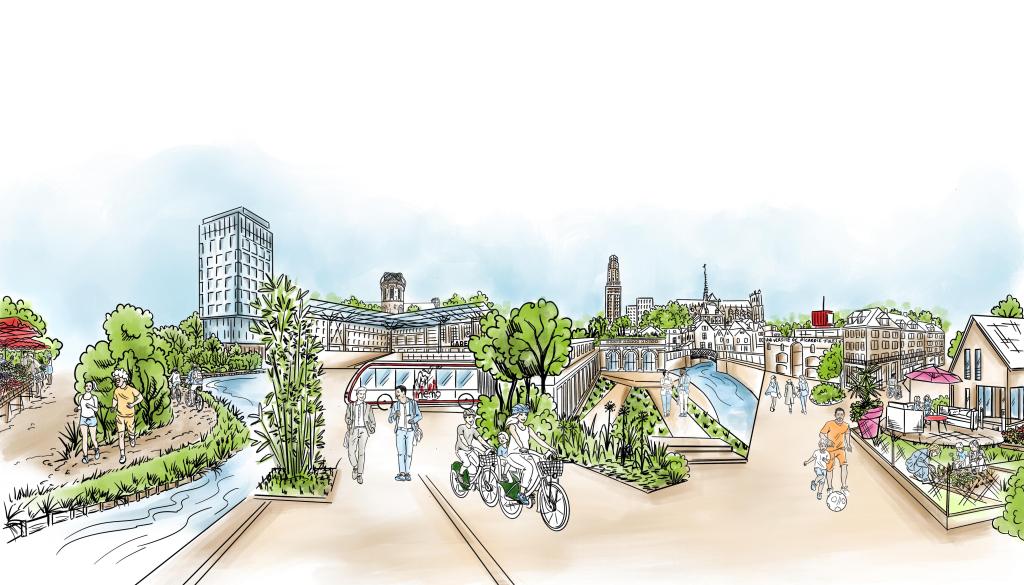
What kind of place should the Royal Borough be in 5, 10 or 20 years?
RBWM is preparing a new Local Plan. This is important because the Plan will help decide where new homes and businesses are built, what infrastructure is needed, how our towns and villages develop, and how our environment is protected and improved.
It isn’t just about how many houses are built.
It is an opportunity to think about what sort of Borough we want to create for ourselves, our children and future generations.
The guide below walks you through some of the key issues, but if you want to go straight to the Consultation Questionnaire or read our Guide to Responding to RBWM’s New Local Plan Consultation question by question, click on the link below;
- Your “How to?” Guide to Responding to RBWM’s New Local Plan Consultation – click here
- Hard copy of the Local Plan Consultation Questionnaire – click here; email to Planning.Consultation@RBWM.gov.uk
- Link to RBWM’s Local Plan 26-point Questionnaire online – click here
- Read the Cllrs Carole and Wisdom Da Costa’s full Consultation submission – click here
Here are six important issues you may want to think about when responding.
1. The right homes, in the right places
We need homes that meet the real needs of local people—including family homes, accessible homes, homes for older people and genuinely affordable Social Rent homes.
But where we build matters too.
Before unnecessarily losing countryside, should we make better use of empty buildings, brownfield land, redundant offices, town centres, underused land and suitable locations within existing urban areas?
And should new homes be located where people can easily reach jobs, schools, shops, healthcare and public transport?
2. More nature—not simply less damage
Development need not mean accepting the continuing loss of nature.
Could the new Plan help create more trees, woodland, wetlands, wildlife habitats and connected green spaces, while protecting the places we already value?
Nature also does useful work for us. Trees provide shade and cooling. Wetlands and floodplains can store water. Healthy soils absorb rainfall. Green spaces improve health and wellbeing.
We should therefore think about restoring nature across the whole Borough, not simply protecting isolated sites.
3. Protect people from extreme weather
Our homes and communities need to be designed for the climate they are likely to experience during their lifetimes—not simply the climate we experienced in the past.
That means thinking now about Thames and surface-water flooding, more intense rainfall, heatwaves, overheating, drought, water shortages, storms and other foreseeable extreme weather.
Could we create more shade and tree cover in our towns? Restore wetlands and floodplains? Improve drainage? Design buildings that remain safe and comfortable during extreme heat?
Climate resilience should help determine where and how we build, rather than being considered afterwards.
4. Cleaner, healthier places to live
Planning decisions affect our health.
Traffic can expose people to air pollution, noise and particulates, while polluted road runoff can enter rivers and ecosystems.
At the same time, green spaces, trees and safe walking and cycling routes can improve physical and mental wellbeing.
The Local Plan provides an opportunity to design healthier neighbourhoods with cleaner air, less harmful pollution, more nature and more opportunities to walk and cycle.
5. Better ways for everyone to get around
Cars will continue to have an important role. But owning a car should not be essential simply to get to work, school, healthcare or the shops.
Could we create an integrated network of rail, clean and frequent buses, better public transport, safe walking and cycling routes and other transport services?
And importantly, should we decide where major housing and employment development goes partly according to whether good public transport can serve it?
Better transport could mean less congestion and pollution while giving residents access to more jobs and services.
6. Infrastructure and jobs must be planned alongside housing
New homes create additional requirements for schools, GPs and healthcare, public transport, roads, water, sewerage, electricity and community facilities.
Nature and climate infrastructure matter too: trees, wetlands, sustainable drainage, green spaces and flood protection.
We should plan these things alongside development rather than trying to catch up afterwards.
We can also ask what sort of economy we want. Could the Borough continue supporting existing businesses while attracting industries and jobs in clean technology, low-carbon construction, energy, environmental services and solutions to climate change and nature recovery?
The central question
The Local Plan inevitably involves difficult choices. Housing, the economy, transport, nature, public health and climate change can sometimes compete.
But they don’t always have to.
Good planning can make them reinforce one another.
For example, regenerating an underused urban site close to excellent public transport could potentially provide:
new homes + Social Rent + jobs + fewer car journeys + lower emissions + town-centre regeneration + less pressure on countryside.
So perhaps the question we should ask is not simply:
“Where can we fit more development?”
but:
“What pattern of development will create the best Borough for the people who live here now and in the future?”
Our simple proposition
Build the right homes, in the right places, for the people who need them—while creating a greener, healthier, better-connected and climate-resilient Borough for everyone.
Plan homes, jobs, public transport, schools, healthcare, nature, flood protection and other infrastructure together from the start—not after development sites have already been chosen.
How to have your say
You do not need to be a planning expert to respond to the Local Plan consultation.
Think about your own experience.
Where does flooding occur? Where is traffic or noise a problem? Which green spaces matter to you? Is public transport good enough? Can your children afford to live locally? Where could existing buildings or brownfield sites be better used? What would make your neighbourhood healthier?
Then tell the Council what you think. Go to https://engage.rbwm.gov.uk/planning/scoping-consultation/
Your personal knowledge of where you live is part of the evidence the Council needs.
How to
More information
You can get more information;
- Online at RBWM – click here
- Download the PDF Booklet, “New Local Plan Consultation July 2026 Brief Explainer” – click here
- Download the PDF Booklet, “New Local Plan Consultation July 2026 Key Topics” – click here


Response
[…] What could you consider when responding to the consultation – our guide, “Help Shape the Future of Our Borough” – click here […]
LikeLike